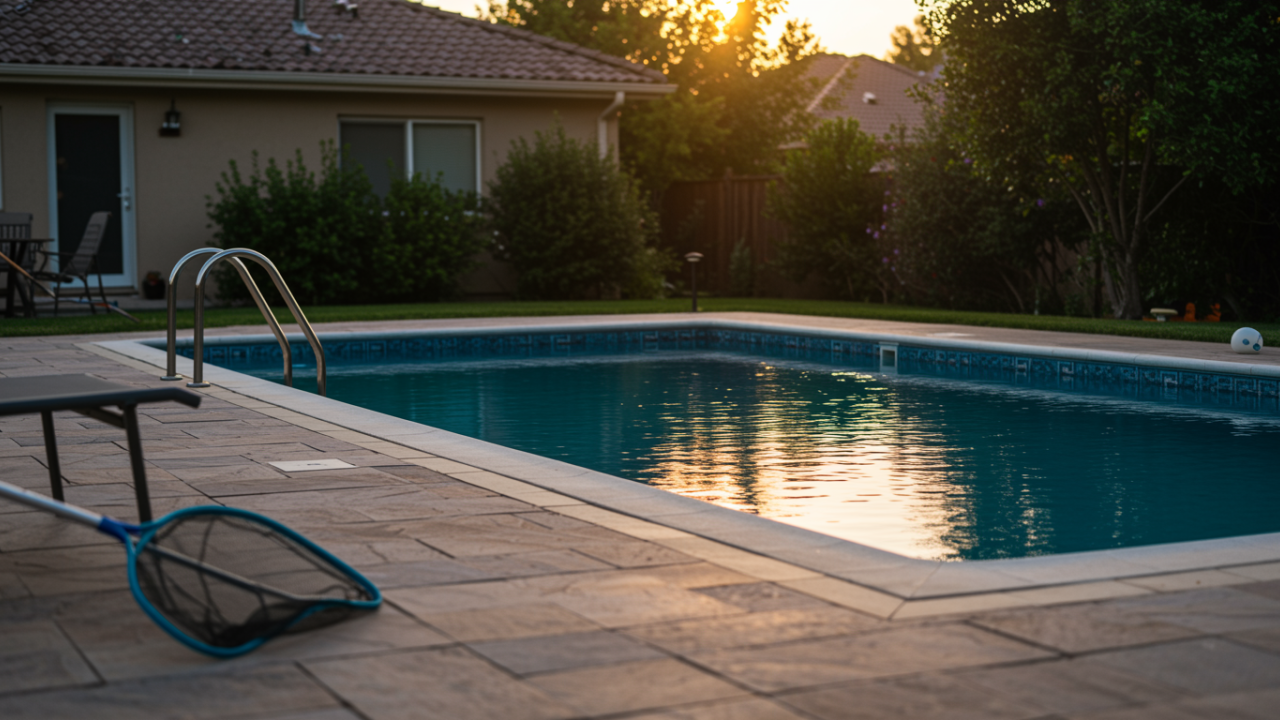
The modern house is an intricate web of connected devices. We adjust our indoor thermostats from the office, check security cameras from the grocery store, and automate our lighting based on the sunrise. Yet, when you step through the back door, that seamless connectivity often vanishes. The backyard swimming area usually remains a stubborn holdout of manual labor, analog gauges, and mechanical timers.
Bringing these two spaces together makes a lot of sense from a practical standpoint. Integrating smart pool technology is the next logical step for homeowners who want to bridge the gap between indoor convenience and outdoor maintenance. It turns a demanding, labor-intensive asset into a responsive, manageable part of your property ecosystem. You do not need to be a networking expert to make the transition. The hardware has become incredibly intuitive.
The goal is to eliminate the friction of daily upkeep. By introducing specific, targeted devices, you can strip away the vast majority of the workload.
The Foundation of a Connected Backyard
What people often miss is that upgrading your exterior equipment is rarely about flashy gimmicks. It is strictly about utility and resource management. Older equipment pads were essentially isolated, “dumb” systems. The main pump ran blindly on a crude mechanical wheel timer. The heater had a stiff manual dial. If you wanted to turn on the aesthetic lighting, you had to physically walk out into the dark, open a metal sub-panel, and flip a heavy switch.
The connected approach centralizes all of this fragmented operation. By introducing hardware that communicates via Wi-Fi or Bluetooth, you regain hours of your weekend. You also gain critical oversight over how much energy your equipment is actively consuming. Systems that run blindly tend to waste electricity and water. Connected systems optimize them.
The shift usually starts by targeting the most time-consuming chores first. In most cases, owners begin with devices that handle chemistry, temperature, and physical cleaning.
Monitoring and Heating: The Invisible Workhorses
Water chemistry is traditionally the most frustrating guessing game associated with backyard ownership. Dealing with liquid drop test kits and trying to accurately match subtle shades of pink or yellow can feel incredibly tedious. Digital water monitors have completely disrupted this outdated routine.
1. Digital Chemistry Monitors
You simply leave these small, specialized devices floating in the water or installed directly in the plumbing line. They continuously analyze the pH, oxidation-reduction potential (ORP), and temperature. Instead of handling caustic chemicals and test strips every Saturday morning, you receive a push notification telling you exactly what the water needs. It removes the human error entirely. Because chemical imbalances can quietly degrade your plaster and corrode your pump internals over time, this constant monitoring actually protects the physical structure of your investment.
2. Wi-Fi Enabled Heat Pumps
Temperature control is the next critical upgrade. Traditional gas heaters or heat pumps require manual adjustment at the bulky unit itself. Wi-Fi-enabled heaters allow you to manage the climate remotely. Imagine leaving your office on a brisk Friday afternoon and using your phone to raise the water temperature. By the time you arrive home, the environment is perfectly comfortable. Furthermore, these smart heaters track long-term energy consumption. You can view detailed usage graphs and adjust your heating schedules to run during off-peak utility hours, which drastically lowers your monthly bills.
read more : https://blessrise.com/
Automation in Action: Cleaning and Ambiance
Once the chemistry and temperature are managed, the focus shifts to the physical upkeep and the visual aesthetic of the space. This is where you see the most immediate, tangible return on your investment.
3. Next-Generation Cleaning Automation
Maintaining physical cleanliness is by far the most physically demanding aspect of ownership. Dragging a manual vacuum through the water is a grueling, inefficient task. The friction of unspooling hoses, priming the pump, and standing in the sun is enough to make anyone actively avoid the chore. Deploying a smart robotic pool cleaner completely shifts this dynamic. These independent units do not rely on your primary filtration system at all.
They navigate the floor, climb the vertical walls, and scrub the waterline autonomously. You simply drop the device into the water and let its internal algorithms map the most efficient overlapping cleaning route. It traps fine silt and large leaves in its own internal filter, which actively preserves the life and efficiency of your main equipment pad.
4. Smart LED Lighting Systems
Standard incandescent bulbs are rapidly being phased out in favor of smart LED lighting systems. These are not just energy-efficient alternatives; they are highly customizable hubs of ambiance. Through a smartphone interface, you can seamlessly change colors, adjust the brightness intensity, or set dynamic light shows that sync with your outdoor audio system. You can program the lights to turn on automatically the moment the sun sets. It adds a sophisticated, modern layer to nighttime entertaining without ever requiring you to touch a switch panel in the dark.
Tying It All Together: Central Hubs
Individual gadgets are highly useful on their own. However, the true value of a modern setup emerges when these isolated devices finally communicate with each other.
5. The Central Automation Controller
A centralized automation hub acts as the brain for your entire exterior setup. Instead of juggling five different apps on your phone, a hub pulls the pump, the heater, the lights, and the chemical dispensers into a single, unified dashboard. This level of integration unlocks incredibly powerful routines that run quietly in the background.
A well-configured automation hub allows you to step away from daily management. The benefits of this centralization include:
- Unified scheduling: Syncing the main pump to run exclusively during off-peak energy hours, drastically lowering your carbon footprint and utility costs.
- Weather adaptation: Advanced systems can read local internet weather forecasts and automatically lower the heater output if a major heatwave is approaching later in the week.
- Remote diagnostics: Receiving instant text alerts if the filter pressure spikes dangerously high or if a motor unexpectedly loses its prime while you are out of town.
- Voice integrations: Connecting the exterior hub to your indoor smart speakers. This allows you to activate the spa jets or turn on the landscape lighting using simple voice commands from your living room.
The Future of Backyard Management
The era of treating backyard maintenance as a disconnected, heavily analog chore is fading fast. You do not have to accept the heavy lifting and constant, stressful monitoring that defined ownership decades ago. Upgrading your space does not require ripping out all your existing plumbing at once.
You can easily take a modular approach. Target the specific tasks that cause you the most weekly frustration, whether that is scrubbing the slippery walls or constantly second-guessing your pH levels. By slowly introducing intelligent, communicative devices into your routine, you stop working as the facility manager for your backyard. You finally get to experience the relaxing environment you intended to build. The transition is highly practical, and it changes the entire dynamic of your summer.
