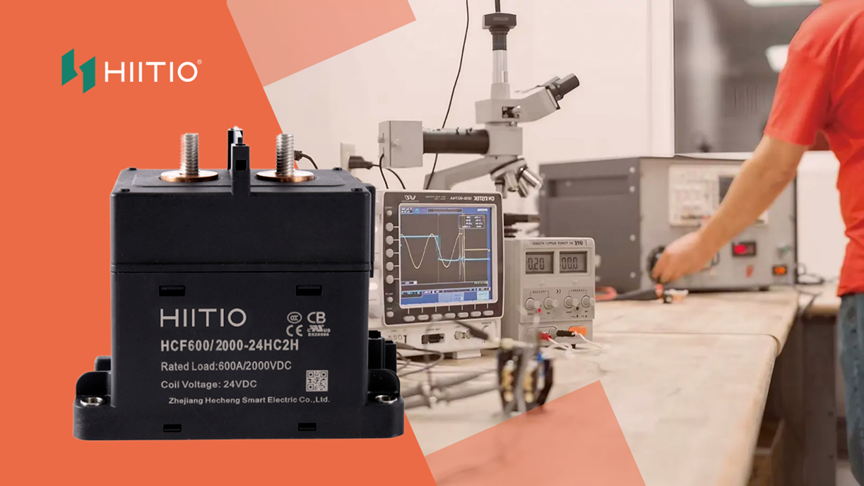
The aviation industry stands at the threshold of its most significant transformation since the jet age, as electric propulsion systems promise to revolutionize air travel with reduced emissions, lower operating costs, and quieter operations. At the heart of these electric aircraft power systems lies a component that must perform flawlessly in one of the most demanding environments imaginable: the high-voltage DC contactor. These specialized switching devices control electrical power distribution throughout the aircraft, managing voltages that can exceed 800 volts while operating in conditions ranging from sub-zero temperatures at altitude to extreme vibration during takeoff and landing.
Electric aircraft architectures rely on sophisticated power management systems that distribute energy from battery packs or hybrid power sources to multiple electric motors, avionics systems, and auxiliary equipment. High-voltage DC contactors for aerospace applications serve as the primary switching mechanism for these high-power circuits, providing both normal operational control and critical safety isolation functions.
The criticality of these components cannot be overstated—a contactor failure in flight could result in loss of propulsion, making redundancy and reliability paramount design considerations. Modern electric aircraft designs incorporate advanced high-voltage DC contactors and relays with aerospace-grade specifications that ensure continued operation even under fault conditions. This article examines why high-voltage DC contactors have become indispensable components in electric aircraft power systems and explores the unique requirements that set aerospace contactors apart from their terrestrial counterparts.
Unique Challenges of Aircraft High-Voltage DC Systems
Electric aircraft power systems operate within constraints that differ fundamentally from ground-based applications. Weight restrictions demand maximum power density, pushing system voltages higher to reduce conductor mass while maintaining necessary power levels. Contemporary electric aircraft designs commonly employ 540-volt to 800-volt DC buses, with some experimental platforms exploring voltages exceeding 1000 volts to further optimize weight and efficiency.
These elevated voltage levels create substantial challenges for contactor design, as the reduced atmospheric pressure at typical cruising altitudes dramatically affects electrical arc behavior. At 40,000 feet, atmospheric pressure drops to approximately 20% of sea level values, significantly reducing the air’s dielectric strength and making arc suppression far more difficult. High-voltage DC contactors for aircraft must incorporate specialized arc suppression technologies that function reliably across the entire altitude envelope.
Key environmental challenges for aircraft contactors include:
- Altitude effects: Operation from sea level to 45,000 feet with corresponding pressure variations
- Temperature extremes: Functioning across ranges from -55°C at cruise altitude to +85°C in equipment bays
- Vibration and shock: Withstanding continuous vibration during flight and shock loads during landing
- Electromagnetic compatibility: Operating without interference in dense electromagnetic environments
- Weight constraints: Minimizing mass while maintaining required performance and safety margins
The combination of high voltage, low pressure, and strict weight limitations creates an engineering challenge that demands innovative contactor designs specifically optimized for aerospace applications.
Power Distribution Architecture and Contactor Functions
Electric aircraft employ distributed power architectures where high-voltage DC contactors control current flow to various subsystems, enabling both normal operations and emergency power management. The typical electric aircraft power distribution system uses contactors at multiple hierarchical levels: main battery disconnect contactors, motor controller input contactors, auxiliary system distribution contactors, and emergency bus isolation contactors.
Main battery disconnect contactors serve as the primary interface between energy storage systems and the aircraft’s power distribution network. These contactors must handle the full battery pack voltage and be capable of interrupting hundreds of amperes under fault conditions. The switching action occurs infrequently during normal operations—typically at the beginning and end of each flight—but the contactor must be ready to perform emergency disconnection at any moment, including during maximum power draw scenarios.
Motor controller contactors provide dedicated power switching for each propulsion motor, allowing independent control and isolation. In multi-motor aircraft designs, this architecture enables continued flight even if one motor system experiences a fault, with contactors isolating the failed unit while maintaining power to operational motors. This redundancy represents a fundamental safety feature that makes electric propulsion viable for manned aviation.
Critical contactor functions in electric aircraft include:
- Battery pack connection and emergency disconnection
- Individual motor circuit control and isolation
- Fault current interruption and system protection
- Pre-charge circuit control for capacitor banks
- Emergency power routing between redundant bus systems
Each of these functions demands contactors with proven reliability, as failure modes could directly impact flight safety. Aviation regulators require extensive testing and certification processes that verify contractor performance across all anticipated operating conditions and failure scenarios.
Arc Suppression Technologies for High-Altitude Operation
The physics of electrical arc extinction at altitude presents one of the most significant technical challenges for aircraft high-voltage DC contactors. When contacts separate under load, an electrical arc forms that must be quickly extinguished to prevent contact damage and ensure proper circuit interruption. At sea level, surrounding air helps cool and deionize the arc, but reduced atmospheric pressure at altitude provides far less cooling capacity.
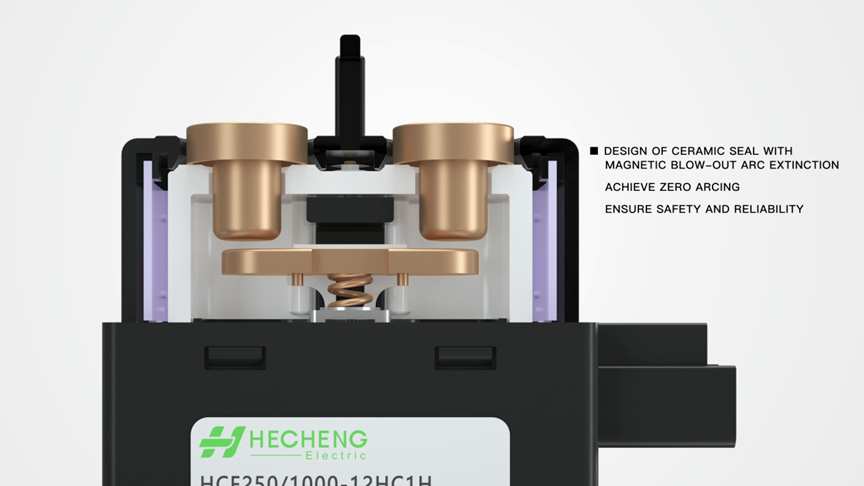
Aerospace contactors employ multiple complementary technologies to achieve reliable arc extinction across all altitudes. Magnetic blowout coils generate magnetic fields that rapidly elongate and extinguish arcs, while specialized arc chamber geometries direct arc energy away from contacts. Contact materials combine silver with refractory metals like tungsten or molybdenum to withstand the extreme temperatures of repeated arc exposure without excessive erosion.
The most advanced aerospace contactors utilize hybrid arc suppression approaches that combine passive chamber designs with active electronic arc detection and suppression. These systems can identify arc formation within microseconds and employ active voltage clamping to accelerate arc extinction, significantly reducing contact erosion and enabling longer service life.
Integration with Aircraft Power Management Systems
Modern electric aircraft feature sophisticated power management systems that continuously monitor electrical system health and optimize power distribution for efficiency and safety. High-voltage DC contactors function as the electromechanical interface between digital control systems and physical power circuits, executing commands from flight computers while providing feedback on actual electrical state.
The integration extends beyond simple on-off control, with contactor feedback signals providing critical system health information. Contact status verification ensures that commanded switching actions have actually occurred, while auxiliary contacts provide position indication for redundancy. Some advanced contactors incorporate current sensing capabilities that enable the power management system to verify load currents match expected values, identifying potential faults before they escalate into safety issues.
read more : Peace Of Mind Guaranteed: Managed Cybersecurity Services Built On NIST Principles
Integration requirements include:
- Low-voltage control interfaces compatible with aircraft avionics systems
- Position feedback for closed-loop switching verification
- Fault indication outputs for rapid system response
- Diagnostic data interfaces for maintenance systems
- Electromagnetic compatibility with sensitive avionics
This deep integration transforms contactors from simple switches into intelligent power distribution nodes that contribute actively to overall system reliability and safety.
